Performancewear with heart

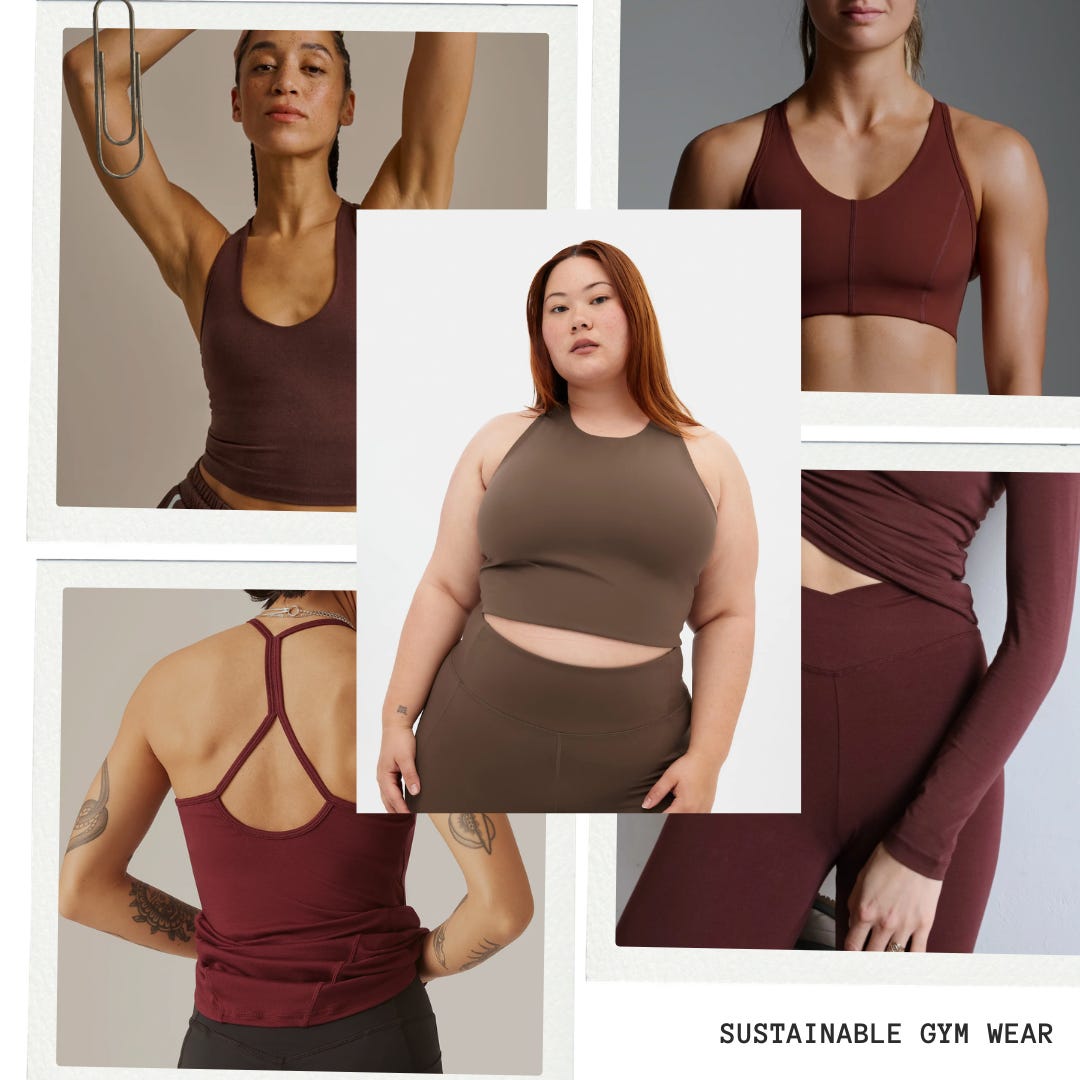
I’ve always marked gym phases with clothing. At eighteen, going to the gym felt like a personality trait. I trained consistently for the next two years, and every six months or so, I’d buy something new to boot: better trainers, a sports bra that suggested commitment etc. Whenever the habit dipped, I’d optimistically hang onto everything, knowing I would return in bursts -January, post-summer, a mad dash before a holiday etc. Not the most sustainable approach. I still own most of it today despite a 15 year hiatus.
I’ve been training consistently for nearly a year which makes the wardrobe situation harder to ignore. Yes, much of what I own is no longer fit for purpose, but also gym gear has come such a long way, even just visually and I’m still susceptible to the inevitable FOMO of what’s out there now. Add to that, most of my existing gym wear is synthetic -polyester, nylon, elastane blends. That’s standard across the industry because those fibres stretch, wick moisture and survive friction. But they’re also derived from petrochemicals and shed microplastics when washed. Microplastics have been found in waterways, marine life and, more recently, in human blood and lung tissue. The long-term health implications are still being studied but I’m deep in the “terrify-yourself-about-everything-health-related” phase of my life.
There’s also ongoing scrutiny around certain chemicals used in textile production -including dyes, finishing agents and substances such as PFAS, sometimes used for water resistance. “Non-toxic” isn’t a regulated term in fashion, and sustainability claims vary widely in meaning. It’s difficult to compare like with like.
What isn’t strongly evidenced -despite how often it’s implied online -is the idea that exercising in synthetic clothing automatically leads to significant chemical absorption because pores are “open”. Skin is an effective barrier. Heat and sweat can increase permeability slightly, but there’s limited direct research showing meaningful systemic exposure from gym wear specifically. That nuance often gets lost. Still, once you start reading, it’s hard to unread.
I try hard to avoid synthetic fibres where I can, especially for everyday clothing for myself and my children. Performance wear has been my exception, largely because I
assumed there weren’t widely accessible alternatives but if anyone would know, it would be my audience... And so I opened it up to the floor.
Bamboo came up quickly. Most bamboo fabric on the market is actually viscose or rayon derived from bamboo pulp, produced through a chemical process unless mechanically processed (which is rare and costly) so although it was a popular choice, it isn’t a clear winner. (Lots of feedback about it becoming quickly misshapen too). Organic cotton avoids synthetic pesticides and fertilisers, which is positive environmentally, but as it naturally absorbs moisture, it can feel heavy very quickly during intense sessions. Wool -particularly merino is a wonder fabric –it regulates body temperature well and resists odour, and there are brands now engineering it for performance. The drawbacks are usually cost related (£££) and, depending on construction, durability under high-friction training. In short: there isn’t a clean solution.
My most worn gym piece is a cotton-rich H&M yoga all-in-one. Sleeveless. Ribbon ties at the ankles. Nothing overly technical about it, but its thick, beautiful and has outlasted more expensive sets. If I found another, I’d snap it up immediately.
Instead, I’m considering buying two or three proper outfits to mark a year of consistency. One higher-end wool set -well constructed, transparent about sourcing. And one mid-range traditional *whispers synthetic* set, chosen carefully on the proviso that I’ll be getting so much wear out of it. My gym trainers are second-hand New Balance from Vinted. I don’t do cardio or HIIT workouts, so they don’t have a heavy impact. They’re functional and do the job well.
What surprises me is how consuming all the techy research becomes. The information isn’t linear either. Environmental impact, chemical safety, durability, cost -each sit in a different corner of the internet. There’s no obvious route for someone who wants lower synthetic exposure but also needs clothing that performs well for a regular workout.
Part of the overwhelm, I suspect, is expectation. Women are encouraged to optimise everything: skincare ingredients, food sourcing, hormone health, home air quality. Gymwear feels like another decision to get “right”, and I feel that even more so as someone who will inevitably share my findings with a wider audience. I’m trying to approach it more simply but sometimes I think I just enjoy making simple things unnecessarily tricky.
Put simply, the goal is to always buy less... Choose well-made pieces... Accept that some stretch requires elastane. Wash thoughtfully. Keep what already works. Replace only what doesn’t fit or function. There’s also the huge mental shift of no longer buying for a hypothetical future version of myself (something I was very guilty of 15 years ago despite being in a decidedly smaller body). I’m buying for today’s version of me who already commits to making health and fitness a priority, and I’m looking forward to sharing with you what I end up getting.