The Scarcity Hangover
This article contains affiliate links.

Every so often, I find myself scrolling through fast-fashion sites late at night. Not because I need anything, but because it feels familiar. There’s comfort in it -the quiet ritual of clicking through new-in sections, comparing cuts and colours, half-remembering what it felt like to buy something without an afterthought.
I grew up with what might seem like opposing values, though they never felt that way to me. I knew the value of second-hand -charity shops, hand-me-downs, the small triumph of finding something pre-loved and making it your own. But I also understood the worth of quality -the idea that a well-made, more expensive piece was a smarter investment when finances allowed. “Buy cheap, buy twice” was a phrase I heard often, a quiet warning to think long-term rather than chase the quick fix.
But when I hit my late teens and started earning, a lot changed. The early 2000s high street was exploding -the first real pay slips, the sudden independence, the thrill of an entire outfit for twenty pounds. For someone who’d spent years being careful, that kind of access felt like freedom -a small rebellion against the caution I’d grown up with.
Even now, nearly two decades on, I can still feel the echo of that thrill. The scarcity mindset doesn’t vanish when your circumstances shift; it just learns new shapes. It’s the instinct to maximise every penny, the sense that value lies in quantity, the quiet anxiety that if you don’t act now, you’ll miss out. You can feel comfortable on paper yet still carry that need to secure, to stock up, to stretch every pound as far as it will go.
My decade in retail didn’t help. I know too much -the Thursday product drops, the exact dates of the quarterly sales, the deliberate drip-feed of newness. Awareness doesn’t make you immune; sometimes it just sharpens the pull. I still browse out of habit, the same way some people scroll property listings or look up holidays they’ll never take. It’s less about wanting and more about staying close to something that once symbolised possibility.
But there’s value in browsing, too, when you know how to look. Fast-fashion sites can be a useful classroom if you approach them with curiosity rather than consumption. If you’re nervous about trying a new trend, they’re a low-stakes way to study silhouettes and fabrics, or to find styling ideas for pieces you already own but don’t wear enough.
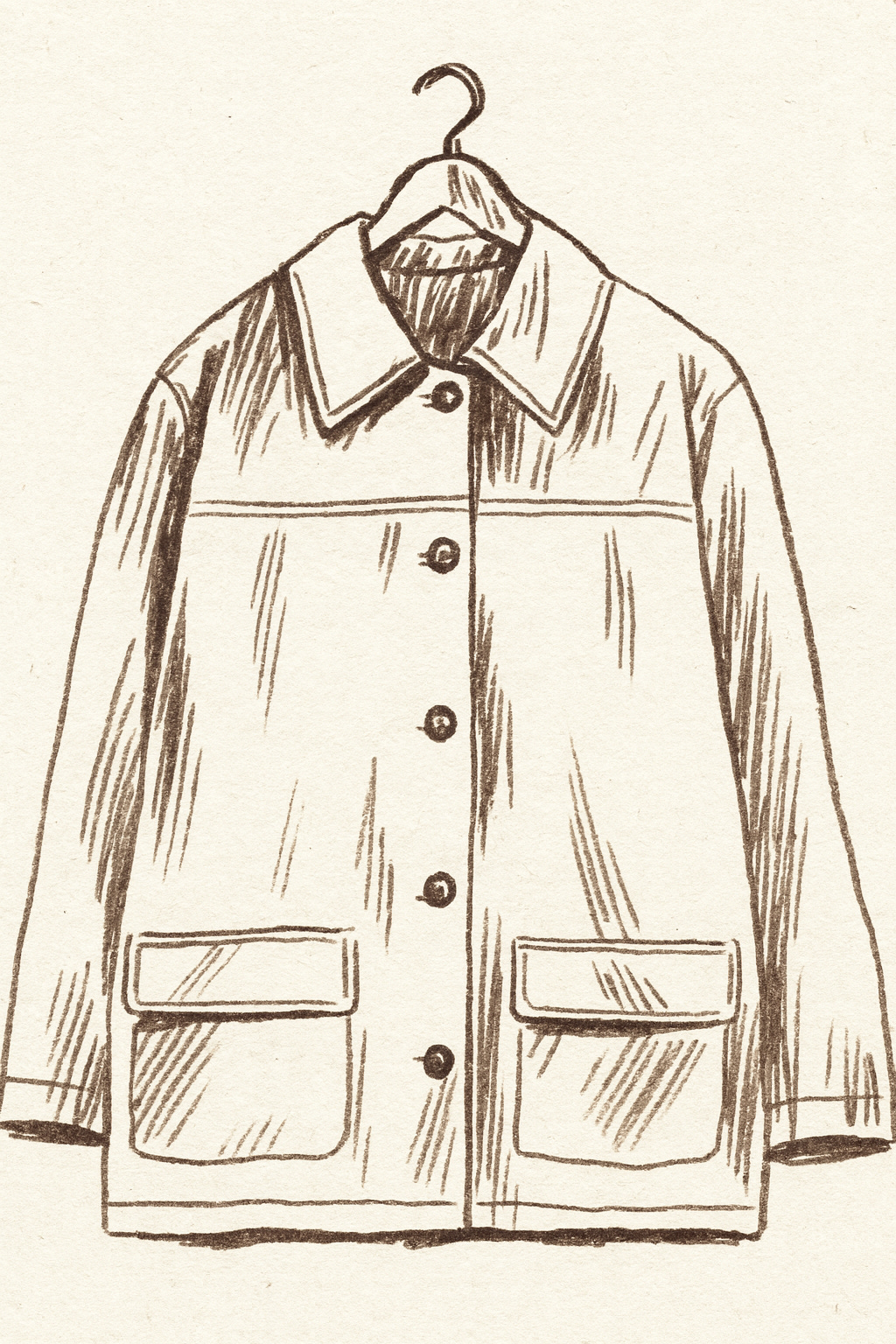
Lately, for instance, I’ve been drawn to suede chore jackets. I have no shortage of outerwear, but I kept circling back -that balance of structure and ease, a bit utilitarian but still soft. Quality high street versions came in around £169, which felt reasonable for a well-made piece. And while the endless options helped me pinpoint what I liked, they also gave me the language for what I was searching for. Once I knew the name -and that they came in everything from cotton twill to pig suede -a quick reverse image search led me to a handful of beautiful, affordable pre-loved versions from one of my favourite resale platforms, Messina Hembry.
Somewhere in that process, my taste clarified. The more I studied shapes and fabrics, the more I saw the through-line in what I’ve always loved, and it became easier to let go of the pieces that no longer served me. What’s interesting is that the aesthetic I’ve always loved -the earthy browns and greens, the natural fibres, linen that softens with wear, supple leather that moulds to the body -is finally back in fashion. The things that once felt hard to find are suddenly everywhere. There’s something satisfying about that, even if I know it’s cyclical. Accessibility can be a gift when it aligns with your values, and I try to treat it as such.
These days, I use that old instinct to hunt differently. If something catches my eye, I’ll trace it -reverse-image search, scroll through resale sites, see what came before. I’ve learned to pause, to look for the version that’s built to last. Because even as prices rise, the fabrics thin: wool becomes wool-mix, leather becomes leather-look. The gap between appearance and substance keeps widening.
I still slip sometimes. A piece will speak to me and I’ll convince myself it’s timeless. Occasionally it is. But mostly, what I’m seeking isn’t ownership -it’s understanding. The same curiosity that once fuelled my shopping now fuels my discernment.
Loving clothes and rejecting fast fashion aren’t opposites. I think they can coexist. It’s possible to love style deeply and still question the systems around it. Maybe the real shift isn’t in abstaining -it’s in learning to look differently.
In Practice
A few ways to keep the love of fashion without the overwhelm.
Treat browsing as research, not reward.
Scroll, save, collect ideas -but pause before buying. Curiosity doesn’t have to lead to consumption.
Reverse the impulse.
When you love a piece, trace it. Find who made it first, what it was once crafted from, and look for an earlier or better-made version.
Ask what it will add, not replace.
Does it open up more ways to wear what you already own, or will it demand an entirely new outfit built around it?


Jackets Top - Bottom, Left to right
Thank you for sharing Messina Hembry, a site I had been desiring but didn’t know existed. I find Vinted hard work for myself, and having something curated, quality and reasonable is stunning.